
Wild Blueberries at a Crossroads: How Maine Growers Are Reimagining the Future of an Iconic Crop
By Contributor, David DePrez, HCSWCD Board Secretary
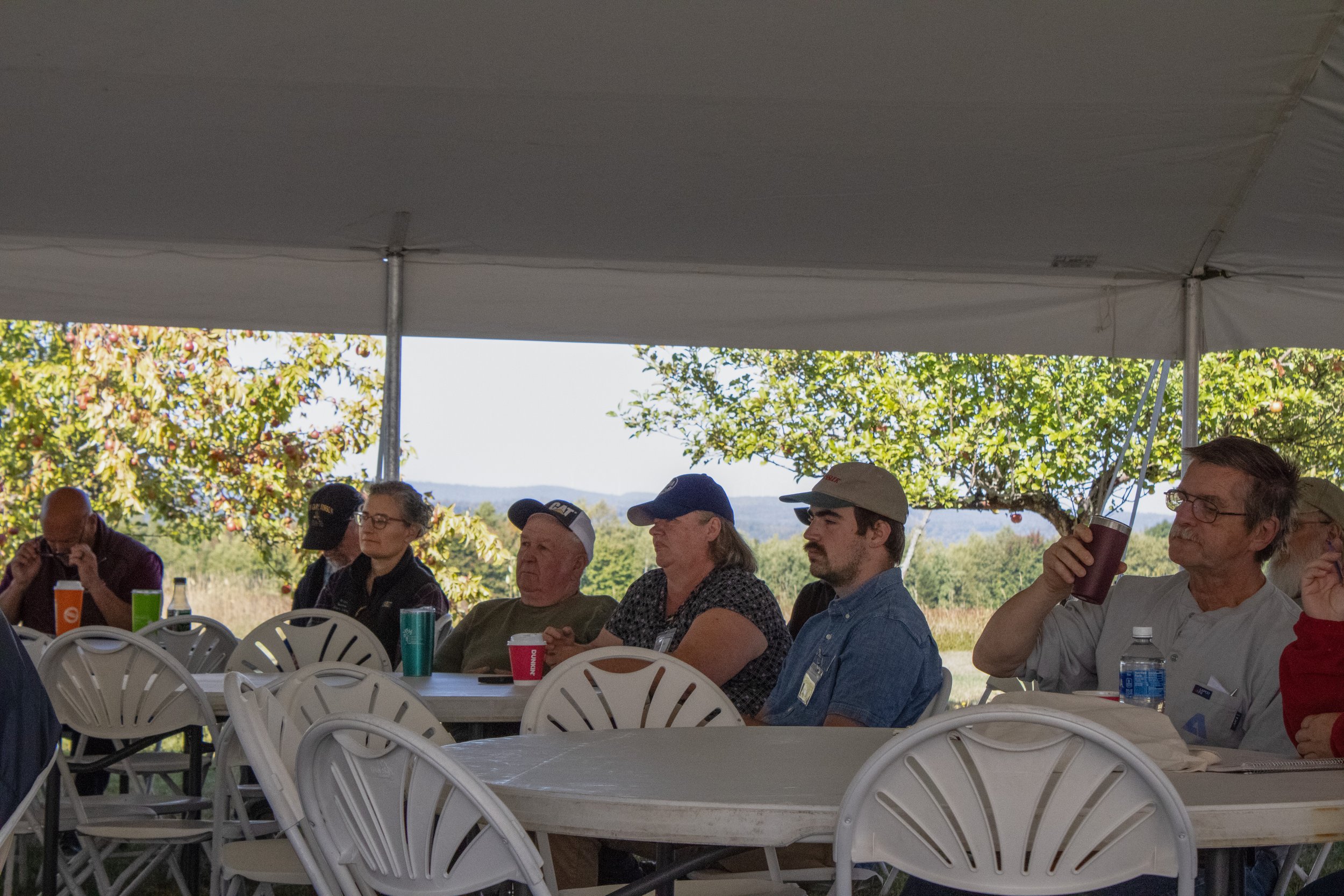
On a brilliant September day, under a sprawling tent at Blue Ridge Farm in Waltham, an unusual crowd gathered. Veteran growers whose families have harvested wild blueberries for generations sat beside young farmers looking for a way into an increasingly difficult business. Scientists, regulators, conservation experts and lawmakers filled out the rest of the seats.
What brought all 59 of them together was a shared concern, and a shared determination.
Maine’s wild blueberry industry faces mounting pressure from drought, soil challenges, rising costs, changing labor policies, wildlife damage and unpredictable weather. Yet the mood at the Wild Blueberry Resilience Summit on September 18 was not one of defeat. It was one of experimentation, collaboration and innovation.
Hosted by grower Peter Jordan and the Hancock and Washington County Soil and Water Conservation Districts, the summit asked a simple question: How can Maine’s wild blueberry industry move from surviving to thriving?
The answers came from every direction, from cutting-edge soil science to agritourism to new berry-cooling technology. And perhaps most encouraging, the future was visible in the crowd itself. A nine-year-old, sixth-generation blueberry grower spent the day helping wherever he was needed, even warning attendees about a hidden wasp nest on one of the tractors. He was a fitting symbol of an industry where knowledge is shared not only across institutions, but across generations.
Soil Science Takes Center Stage
For many growers, resilience begins beneath their feet.
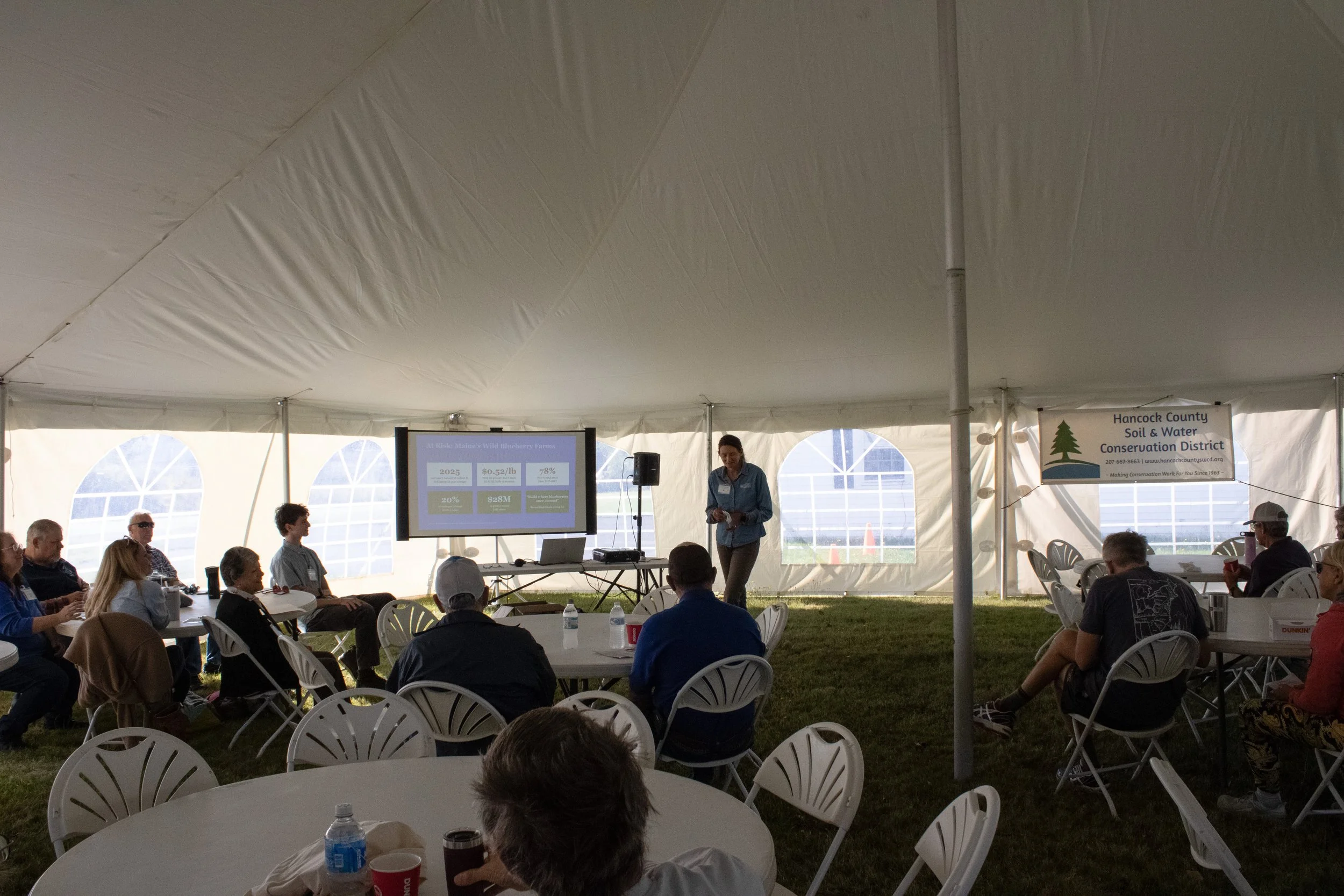
University of Maine Extension specialist Lily Calderwood led discussions on soil nutrients, pest management and the critical role of pH. Wild blueberries thrive in highly acidic soil, generally between pH 4 and 5. One grower shared a striking result: “I put 2,000 pounds of sulfur down and got no weeds.”
Accurate testing matters more than ever. Growers discussed using soil meters that cost about $800, sampling dozens of spots in a zig-zag pattern across each field. The results can be surprising, with readings ranging from 3.8 to 5.2 within a single field.
The conversation quickly turned to policy. If agricultural lime is routinely subsidized to change soil chemistry, several attendees asked, why shouldn’t elemental sulfur get the same support?
Calderwood also stressed timing. Soil chemistry shifts through the growing season, so testing should happen under stable conditions. Spring fertilizer needs time, along with rain or irrigation, to reach the roots before leaf tissue tests can show meaningful results. And applying ammonium sulfate too late in the season can lead to excessive leafy growth and a weaker crop.
The lesson was clear: precision agriculture is no longer optional. It is fast becoming a requirement for economic survival.
Chasing Stability in an Unstable Market
Soil health drives productivity, but economics decide whether farms stay in business.
Eric Venturini of the Wild Blueberry Commission described an increasingly complex policy landscape. The commission tracks 50 to 90 state bills each year that could affect growers. Topics included minimum wage requirements for farmworkers taking effect in 2026 and a growing number of low-interest agricultural loan programs. The commission is funded through a three-quarter-cent-per-pound assessment and is made up of five growers and four processors.
Through it all, participants kept returning to one fundamental challenge. As one put it: “The biggest need of the blueberry industry is a stable rate of income.”
That simple statement echoed throughout the day.
Funding Opportunities Expand
One of the summit’s strongest themes was that help exists, but many growers don’t know how much is available.
Representatives from the USDA Natural Resources Conservation Service highlighted the Environmental Quality Incentives Program (EQIP), which can provide up to $450,000 in reimbursement-based support over ten years. The Conservation Stewardship Program offers annual payments to growers who use conservation practices. The Farm Service Agency supports infrastructure repairs, such as storm-damaged culverts and wells, along with storage and transportation improvements.
Perhaps most eye-opening was the Natural Resources Disaster Relief Assistance Program. Administered by Lily Kenny of the Maine Department of Agriculture, Conservation and Forestry, it currently manages $60 million for weather-related farm losses between 2020 and 2025.
For growers still recovering from storms, the scale of that assistance surprised many in the tent. For others, the complexity of federal and state grants remains a real barrier.
Turning Drought into a Design Problem
If one concern united nearly every speaker, it was water.
Tom Gordon of the Department of Agriculture’s Farmers Drought Resilience Program painted a stark picture. Maine receives trillions of gallons of precipitation each year, yet recent dry spells have shown how misleading annual averages can be. Eighty-five percent of Maine cropland has no irrigation.
The state is responding by investing in wells and storage ponds. Farmers can apply for funding for gravel-packed wells, engineered storage systems and water management plans. Eligibility often depends on solid data, good stewardship and a favorable cost-benefit ratio. Agricultural engineering consultant Candice Gilpatric walked attendees through the detailed measurements needed to evaluate pond and water storage projects.
The message from both was straightforward: drought resilience is no longer about reacting to shortages. It is about building systems that can withstand them. But one question remains. How can small, multigenerational farms afford the ongoing cost of maintaining water and irrigation systems?
Testing a New Tool: Biochar
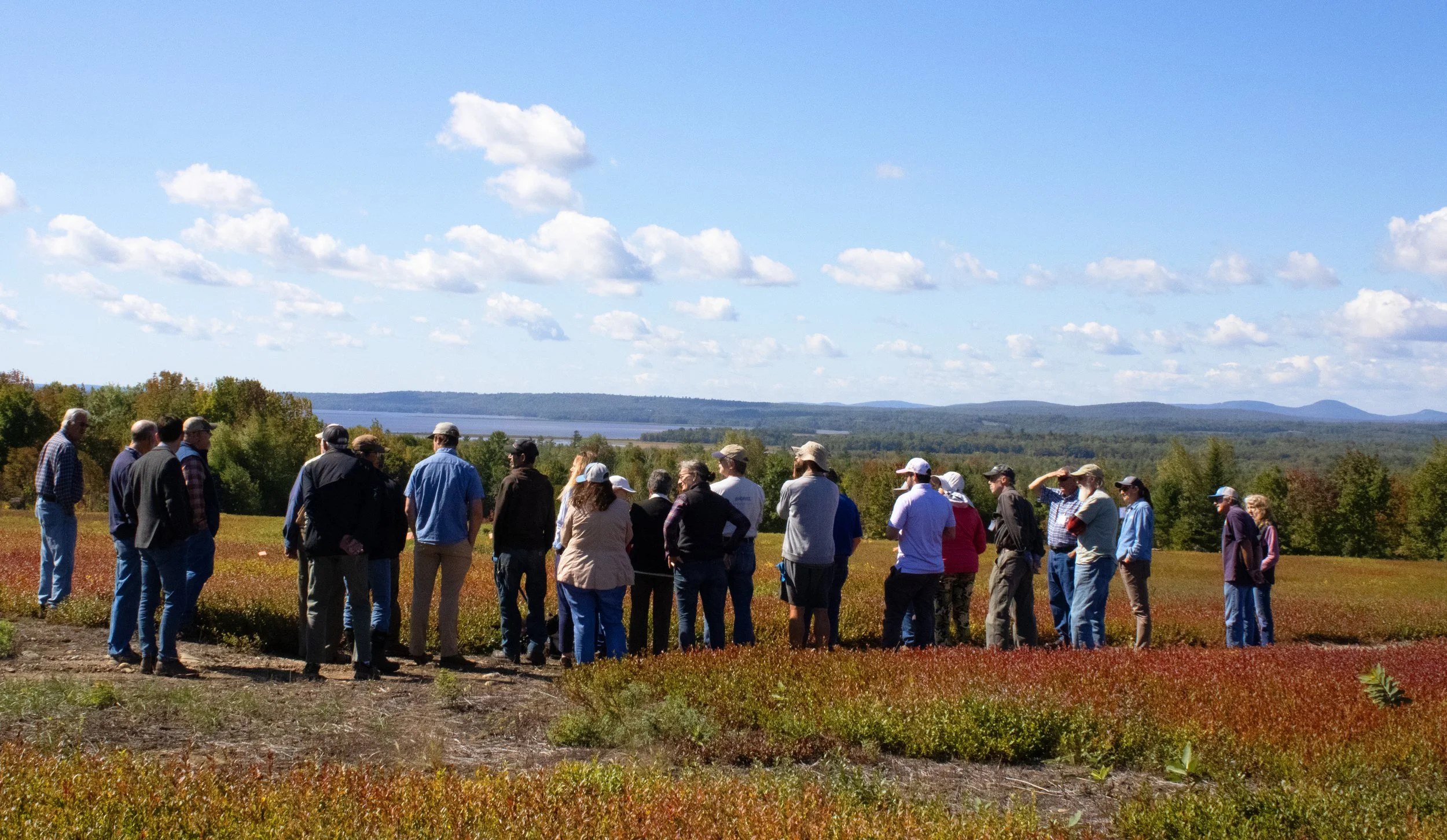
Outside the tent, attendees toured research plots set up by Peter Jordan. These small plots may hold one of the summit’s most intriguing experiments.
Jordan is testing biochar, a charcoal made from waste lumber, as a soil amendment alongside mulching. Supporters believe it may help soil hold water and nutrients, two advantages that matter most during drought. Skeptics point to its high cost.
To separate promise from speculation, researchers and growers talked through how to design a fair test: baseline measurements, control plots, transects and one variable changed at a time. Only then can they tell whether biochar truly improves stem growth, flowering, yield and fruit quality.
The discussion reflected a broader shift across agriculture, toward decisions driven less by anecdote and more by data.
Organic Production Continues to Grow
John Welton of the Maine Organic Farmers and Gardeners Association reported that berries are among the fastest-growing parts of the organic sector. Today, 58 certified organic operations manage roughly 1,300 to 1,600 acres of Maine’s commercial wild blueberries.
The switch to organic can be tough, especially in the first year. Growers must keep detailed records, document how they clean equipment and set up buffers between certified fields and neighboring farms. Still, many are pursuing certification because of growing consumer demand and premium prices.
From Waste to a Valuable Resource
Mark King of the Maine Department of Environmental Protection pointed out that more than 40 percent of Maine’s solid waste is organic material that could become compost. For blueberry growers, good compost can improve soil structure, moisture retention and long-term fertility.
King shared a simple tip from Maine Compost School. Squeeze a handful of compost-amended soil. If it holds together like soft putty, it is at about 55 percent moisture, right where it should be. It’s a field-ready test that needs no equipment at all.
Selling More Than Berries
Innovation wasn’t limited to the field.
Lisa Hanscom of Welch Farm spoke about agritourism. Her family’s farm has been operating since the 1760s and has supported nine generations. Tours, festivals and on-farm experiences give visitors a deeper connection to Maine’s wild blueberry heritage.
“Farms sell an experience,” Hanscom explained. Those experiences build loyal, lifelong customers, and sometimes even seasonal harvest workers. As farms look for new sources of income, agritourism may be one of the most accessible options.
Innovation Reaches the Packing Line
Resilience doesn’t stop once the berries leave the field.
Ron Howard of Brodis Blueberries showcased Fresh Pack Forced Air Cooling, a system that draws air through stacked crates to chill freshly harvested berries quickly. Faster cooling means less damage from heat and fruit weight, longer shelf life, less spoilage and better fresh and frozen berries. It is exactly the kind of practical innovation that can keep Maine competitive.
An Industry Determined to Adapt
Throughout the day, conversations kept returning to the same truth: no single solution will secure the future of Maine’s wild blueberries. It will take healthier soils, better water management, stronger funding, careful experimentation, new business models and smart technology.
It will also take collaboration. On one side of the tent sat growers whose families have harvested blueberries for generations. On the other sat researchers, agency staff and young farmers eager to try new approaches.
By the end of the day, the picture was not of an industry in decline, but one in transition. Maine’s wild blueberry growers face unprecedented challenges. Yet from biochar trials and drought planning to organic certification, agritourism and new cooling systems, they are building a roadmap for the future.
And as that nine-year-old, sixth-generation grower moved through the crowd, helping wherever he could, the industry’s future seemed less uncertain, and more like a story still being written.